
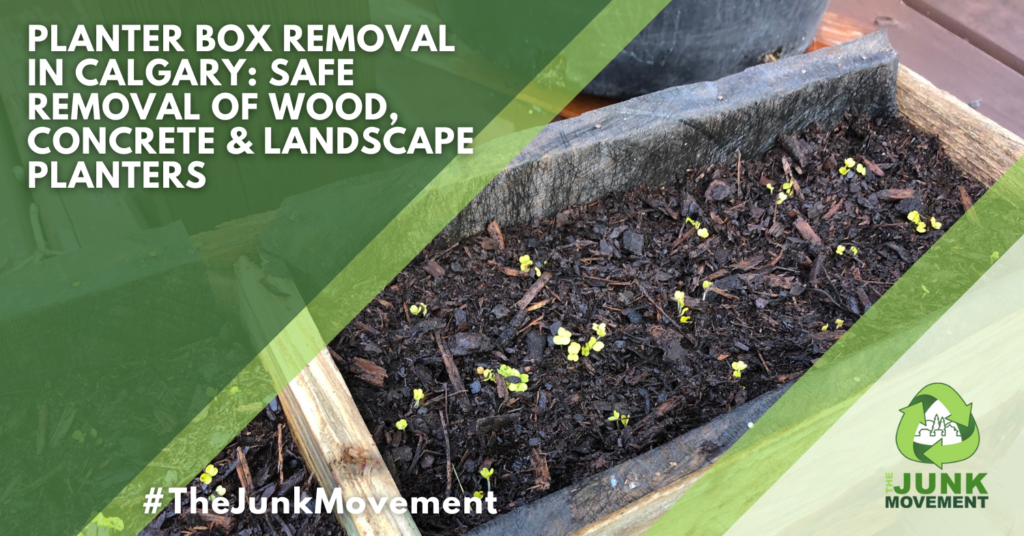
Old planter boxes can quickly become an eyesore, create maintenance headaches, and take up valuable outdoor space. Whether you’re redesigning your backyard, replacing deteriorating landscaping features, or preparing for a new outdoor project, professional planter box removal can save time, prevent property damage, and eliminate the challenge of disposing of heavy materials.
At The Junk Movement, we provide professional planter box removal services throughout Calgary and surrounding communities. From small wooden garden beds to large concrete landscape planters, our team handles the demolition, removal, hauling, and disposal so you can focus on your next project.
Why Homeowners Remove Old Planter Boxes
Planter boxes are a popular landscaping feature, but over time they can deteriorate or simply no longer fit your property’s design.
Common reasons Calgary homeowners choose planter box removal include:
- Rotting or deteriorating wood structures
- Cracked concrete planters
- Backyard renovations
- New landscaping projects
- Expanding lawn space
- Building a deck, patio, or shed
- Selling a home
- Reducing yard maintenance
- Replacing outdated landscaping features
Removing old planters can instantly improve the appearance and functionality of your outdoor space.
Types of Planter Boxes We Remove
Every property is different, which is why we remove a wide variety of planter box styles and materials.
Wood Planter Boxes
Wood planter boxes eventually break down due to Calgary’s freeze-thaw cycles, moisture exposure, and natural aging. Rotting wood can become unstable and unattractive, making removal the best long-term solution.
Concrete Planter Boxes
Concrete planters are durable but extremely heavy. Removing them often requires specialized equipment, proper lifting techniques, and safe disposal methods.
Raised Garden Beds
Many homeowners remove raised garden beds when redesigning their landscaping or transitioning to lower-maintenance outdoor spaces.
Retaining Wall Style Planters
Some planter boxes are integrated into retaining walls or landscape features. Our team can safely dismantle and remove these structures while minimizing disruption to surrounding areas.
Decorative Landscape Planters
Large decorative planters made from stone, concrete, timber, or composite materials can be difficult to move without professional assistance.
Why Planter Box Removal Can Be Difficult
Many homeowners underestimate the amount of work involved in removing landscape planters.
Challenges often include:
Heavy Materials
Concrete, stone, and treated lumber can weigh hundreds or even thousands of pounds.
Hidden Fasteners and Anchors
Many planter boxes are secured using rebar, spikes, concrete footings, or buried support systems.
Soil Removal
Even after the structure is dismantled, large amounts of soil often need to be removed or relocated.
Disposal Requirements
Materials such as treated wood, concrete, and landscape debris require proper disposal and recycling.
Professional removal eliminates the risk of injury while ensuring the job is completed efficiently.
The Benefits of Professional Planter Box Removal
Save Time and Effort
Removing a large planter box can take an entire weekend or longer for a homeowner. Our experienced team can often complete the work in a fraction of the time.
Prevent Property Damage
Improper demolition can damage patios, fences, irrigation systems, sidewalks, and nearby landscaping.
Safe Removal of Heavy Materials
We use proper tools and techniques to safely remove and transport bulky materials.
Complete Cleanup
After demolition, we remove all debris and leave the area clean and ready for its next purpose.
Responsible Disposal
Whenever possible, materials are recycled or diverted from landfills to minimize environmental impact.
Our Planter Box Removal Process
At The Junk Movement, we make the process simple and hassle-free.
1. On-Site Assessment
We evaluate the planter box size, materials, location, and accessibility.
2. Demolition and Dismantling
Our team safely dismantles the structure while protecting surrounding property features.
3. Soil and Debris Removal
If required, we can remove excess soil, landscaping materials, and construction debris associated with the planter.
4. Hauling and Disposal
All materials are loaded, transported, and properly disposed of or recycled.
5. Final Cleanup
We leave the area clear and ready for your next landscaping or construction project.
Popular Projects After Planter Box Removal
Many homeowners remove planter boxes as part of a larger outdoor renovation.
Common projects include:
- New patios
- Deck installations
- Artificial turf installations
- Backyard expansions
- Garden redesigns
- Hot tub installations
- Shed construction
- Outdoor entertainment spaces
- Lawn restoration projects
Removing outdated landscape features often creates opportunities to better utilize your outdoor space.
What Happens to the Materials?
We prioritize environmentally responsible disposal whenever possible.
Materials commonly recycled include:
- Untreated wood
- Scrap metal fasteners
- Concrete
- Stone
- Landscape materials
Our goal is to reduce landfill waste while ensuring all debris is handled properly.
Why Choose The Junk Movement for Planter Box Removal in Calgary?
Planter box demolition often involves more than simply tearing down a structure. It requires proper planning, safe removal techniques, and responsible disposal.
Calgary homeowners choose The Junk Movement because we offer:
- Professional demolition services
- Fast and reliable scheduling
- Complete debris removal
- Eco-friendly disposal practices
- Transparent pricing
- Friendly local service
- Fully insured operations
We make it easy to remove unwanted landscaping features and reclaim valuable outdoor space.
Book Your Calgary Planter Box Removal Today
Whether you’re removing a small raised garden bed or a large concrete landscape planter, The Junk Movement has the tools and experience to get the job done safely and efficiently.
Contact The Junk Movement today for a free quote on planter box removal in Calgary and let us help you prepare your property for its next transformation.